In contemporary luxury interior design, the value of a space lies not only in its forms or materials, but in the ability of its details to tell a story. Among these, surfaces play an increasingly central role: no longer simple finishes, but design elements capable of defining identity, atmosphere, and the perception of space.
Through light, material, and craftsmanship, a surface can become an expressive language. It is here that the art of inlay finds a new interpretation, evolving from a traditional decorative technique into a contemporary design tool.
Inlay: A Tradition That Continues to Evolve
For centuries, inlay has represented one of the most refined expressions of Italian cabinetmaking. Originally developed as a technique to enrich wood through the combination of different veneers, materials, and decorative motifs, it has successfully crossed eras and styles without losing its value.
Today, the art of inlay continues to evolve, adapting to the needs of a more essential and contemporary design language. Decoration is no longer conceived as an added element, but as an integral part of the project. Geometries, material contrasts, and surface treatments become tools capable of introducing rhythm, depth, and character, contributing to the identity of a space.
In this evolution, tradition and innovation coexist naturally. Craftsmanship continues to guide the making process, while design embraces new aesthetic sensibilities and new ways of interpreting luxury.
Surfaces That Create Depth
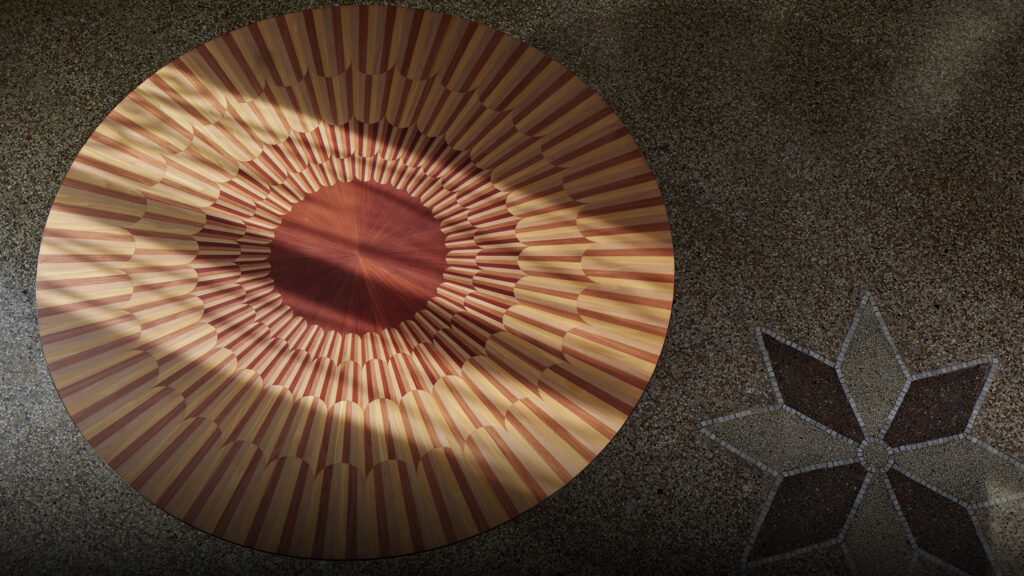
Decorative surfaces have become one of the most effective tools for shaping the personality of an interior. Through woodworking, carving, inlays, and the integration of different materials, matter acquires depth and becomes the protagonist of the visual experience.
Contemporary inlay often explores the dialogue between wood species, colors, and textures, creating subtle patterns that emerge through light and perspective. Likewise, carved surfaces generate three-dimensional effects that continuously transform the perception of furniture throughout the day.
Alongside traditional techniques, decorative materials such as marble, glass, metals, and marquetry are increasingly used—not to create excess, but to add complexity and refinement. The surface ceases to be a simple covering and becomes an architectural component of the design itself.
It is precisely within this dialogue between light and material that one of the most contemporary forms of elegance emerges: a beauty that reveals itself gradually and whose value unfolds over time.
From Surface to Atmosphere
Every material responds differently to light. A wood grain, an inlay, or a carved texture can amplify brightness, create visual depth, or introduce a sense of warmth and comfort.
For this reason, decorative surfaces influence not only the aesthetics of a piece of furniture but also the overall atmosphere of a space. A crafted boiserie, a table enriched with material inserts, or a sideboard enhanced by artisanal details become elements capable of interacting with architecture and reflecting the personality of those who inhabit the space.
In contemporary design, luxury is increasingly expressed through this ability to create emotion without excess. It is the details, the craftsmanship, and the quality of materials that build an authentic and enduring experience.
Inlay in Bianchini Atelier Projects
In projects signed by Bianchini Atelier, decorative surfaces play a fundamental role in shaping the identity of interiors.
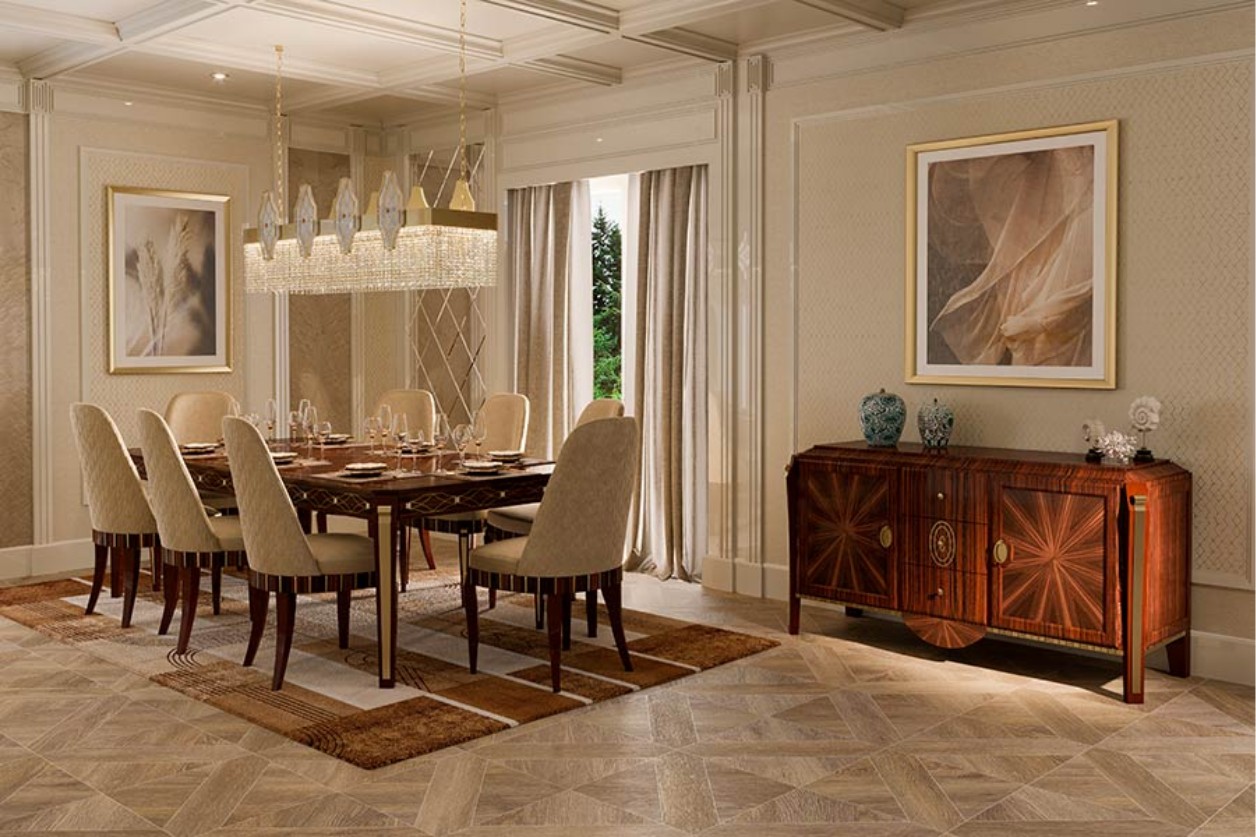
In the Private Villa in London, woodworking techniques and decorative details engage in a dialogue with the architecture, creating sophisticated environments where classical language is reinterpreted through balanced proportions and a deep attention to materiality. Inlays and crafted surfaces generate visual depth and establish continuity between furniture and space.
The Apartment in Moscow offers another significant example of how Italian craftsmanship can become a defining element of a project. Here, fine wood essences, decorative surfaces, and cabinetmaking details contribute to the creation of an elegant and international atmosphere, enhancing the character of the interiors through the quality of the workmanship.
Two projects that differ in style and context, yet are united by the same focus on materiality and by the ability of surfaces to become an integral part of the design narrative.
Between Classic and Contemporary
Today, the art of inlay finds different expressions within the two design souls of Bianchini Atelier.
Within the classic language, decorative surfaces draw inspiration from the great Italian cabinetmaking tradition, reinterpreting Art Déco influences and decorative motifs through refined craftsmanship, precious wood species, and details that enhance the character of the furniture. Here, inlay becomes a distinctive element that contributes to the elegance and prestige of each piece.
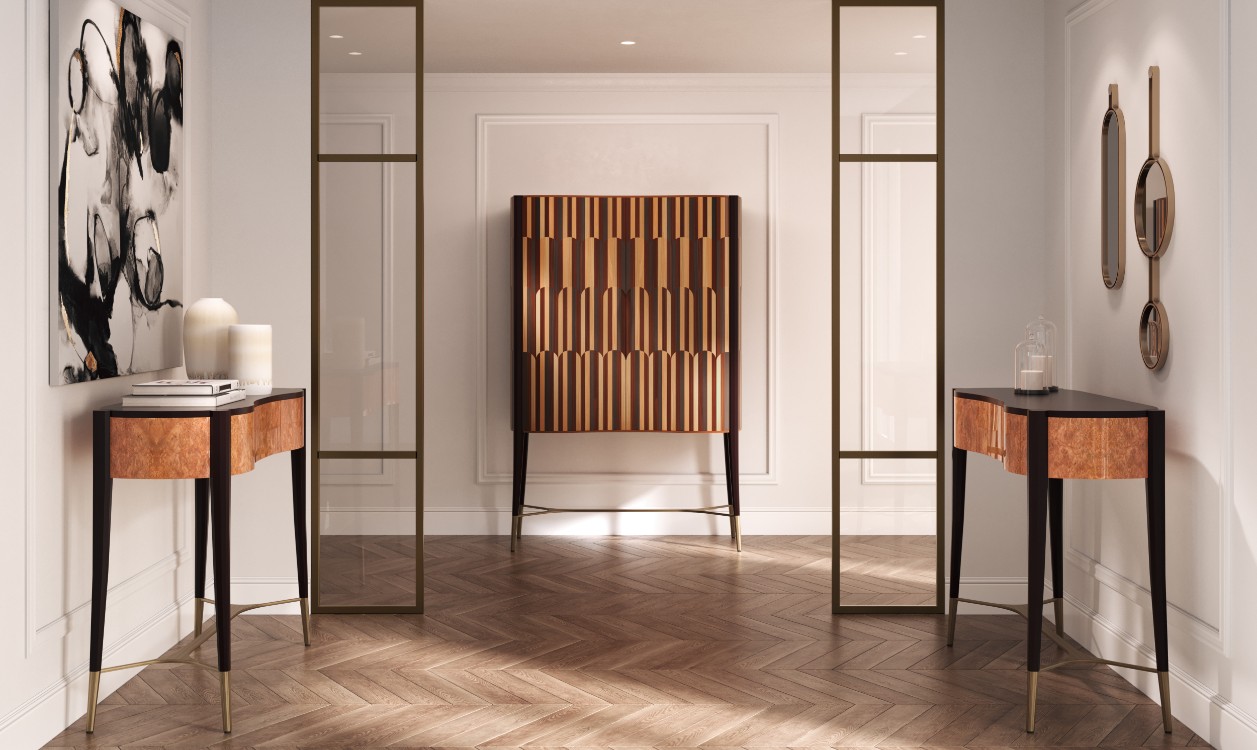
Within the contemporary language, decoration becomes more essential. Surfaces are lighter, material contrasts take on greater importance, and inlays are integrated discreetly into the design, becoming part of the furniture’s very structure. Contemporary tables and furnishings use materiality to create rhythm and depth, maintaining a sophisticated balance between functionality and aesthetic research.
Two different approaches, united by the same commitment to Italian craftsmanship, material quality, and the ability of surfaces to tell a story.
Material as the Signature of Design
From traditional inlay to contemporary surfaces, every technique tells a story of research, skill, and design sensitivity.
In luxury interior design, the value of a piece of furniture lies not only in its form but also in the ability of the material to express identity and create relationships with the surrounding space. Through woodworking, inlays, and decorative surfaces, design gains depth and meaning, transforming every element into a presence capable of enduring over time.
It is within this dialogue between tradition and innovation that craftsmanship continues to find its most authentic expression, giving life to furnishings that do more than furnish a space—they tell a story.